Esther - Dunedin Consort - BBC Music Magazine
01 August 2012
BBC Music MagazinePaul Riley
The sort of questions
about texts and sources that keep scholars awake at night is probably Mogadon
to the casual listener. But Handel's Esther, his first 'English' oratorio,
is a minefield into which John Butt enters brandishing a new edition.
Anyone already owning
the Harry Christophers mid-1990s recording of the 1718 version with The Sixteen
and the Symphony of Harmony and Invention needn't necessarily be alarmed by the
appearance of the usurper. The date has always been problematic. A viola
interpolation aside, Butt's three-act division can be achieved by pausing Christophers's
disc before 'Jehovah, crowned with glory bright', by losing an aria, and
reversing the order of another and its recitative. The more crucial difference
rests in the scale of the two recordings - Christophers's chamber choir and
slightly larger orchestral forces, versus the small-vocal-ensemble approach the
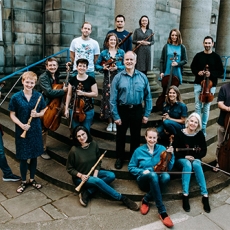
Dunedins have championed in discs of Bach and Handel's Acis and Galatea.
Paradoxically, a
two-voices-to-a-part achieves more immediacy than a larger choir, coupled with
a stylish and delightfully intimate band. Yet again, Butt demonstrates that
less can be more. With soloists drawn
from a distinguished consort including tenor James Gilchrist, countertenor
Robin Blaze and soprano Susan Hamilton, the ear-catcher turns out to be
bass-baritone Mathew Brook's Hamam: a 'bad guy' whose Act III accompagnato would
win over the most hardened of juries. Tenor Thomas Hobb's mellifluous 'Tune
your harps' plucks plaintive heartstrings too.
Related Links
Dunedin Consort
James Gilchrist
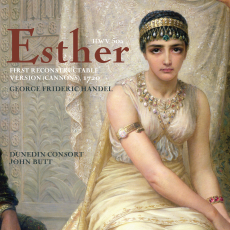
Handel: Esther, First reconstructable version (Cannons), 1720