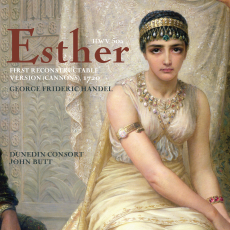
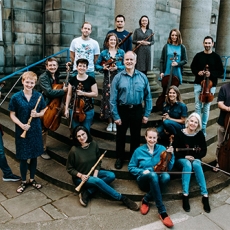
Esther - Dunedin Consort - International Record Review
01 June 2012
International Record ReviewHugh Canning
Esther's reputation as 'the
first English oratorio' dates from its substantial revision in 1732 as a
large-scale dramatic work with chorus in which Italian opera singers -
including the soon to defect star castrato, Senesino - mangled the words so
badly that one listener thought they might be singing in Welsh! The pristine
Cannon version recorded here by John Butt's Dunedin Consort dates from at least
12 years earlier, when Handel wrote small-scale English works for the Duke of
Chandos in his palatial residence at Cannons, near Edgeware, then north of
London. Butt calls his edition 'the first reconstructable version', dating from
1720, though by this time, Handel had been tinkering with it for two years.
Conceived as a companion piece to the original 'Cannons' Acis and Galatea
- which Handel also inflated, bilingually, in 1732 with material from his even
earlier Italian cantata Aci, Galatea e Polifemo - Butt offers this
version as a 'sequel', as he calls it, to his Linn recording of that pastoral
masterpiece (reviewed in December 2008), with similar vocal forces, one of the most
attractive versions on disc.
Using a 'chorus'
of only 11 singers, all but one (soprano
Emily Mitchell) additionally assuming solo duties, Butt proposes an Ur-Esther
of delightful chamber proportions, of translucent choral and instrumental
textures (20 players including his own harpsichord continuo) and featuring
principals of light, bright timbre. The exception is Matthew Brook as the pagan
priest Haman, a Biblical Polyphemus in the villainous virtuosity of 'Pluck root
and branch from out the land' in which he threatens to 'let Jewish blood dye
ev'ry hand' and 'raze their temples to the ground'. Haman's opponents are the Israelite
priest, Mordecai, and his princess, Esther, selected by the Persian King
Assuerus (Ahasuerus) as his bride, who saves her people by means of her erotic
appeal, though not without visiting her fury and vengeance on her persecutor,
Haman.
The Cannons Esther,
sometimes called a 'masque', is in fact an oratorio in embryo - the text,
attributed to John Arbuthnot, is likely to make us smile condescendingly in
modern performances - but is full of marvellous music. In 1718-20, Assuerus -
originally a tenor role and presumably sung by the creator of Acis - shares the
lovely duet 'Who calls my parting soul from death' with the titular heroine and
follows it with the ravishing amorous aria 'O beauteous Queen, unclose those
eyes!, while Esther herself has contrasting numbers, the lamenting 'Tears
assist me, pity moving' and the furious 'Flatt'ring tongue, no more I hear
thee!' with which she rounds on the fallen, and soon to be condemned, Haman.
However, it is
Mordecai who has the plum solo 'Dread not, righteous Queen, the danger' with
the young Handel at his most unexpected and sublime (it is beautifully sung
here by Nicholas Mulroy). Even if the characters are less than richly conceived
- Handel fleshed them out in 1732 and later revivals, though not with complete
success - the score contains the seeds of genius that flowered in his mature oratorios of the
late 1730s and 1740s, above all in the final choral and solo sequence, almost a
self contained cantata in itself harking back to Purcell's Odes, with a
chorus that looks forward to the great 'Hallelujah' in Messiah.
Butt's consort of
soloists do this great music proud, sounding larger than their number would
suggest, and easily a match for The Sixteen and Hogwood's Academy of Ancient
Music Choir. Soloistically, the results are more uneven, the low voices easily
outclassing the high: as in ACIS, this is a tenor dominated ensemble with James
Gilchrist outstanding as Assuerus (and in the tiny supporting role of
Habdonah), Mulroy's already mentioned Mordecai and Thomas Hobbs making a
highlight of the First Israelite's celebrated ‘Tune your harps!'.
More problematic, for
me anyway, are Susan Hamilton's Esther and Elektra Lockhead's ‘Israelite Boy'
(a role designated Israelite Woman in the rival recordings). Butt claims that,
because of oboe doublings of the solo soprano parts, that Handel may have had
small-voiced boys in these roles at Cannons. Consequently he chooses sopranos
with light, boyish-timbred voices, but Hamilton's Esther sounds skittish,
soubrettish almost - much more so than Emma Kirby, for example - and whatever
voices Handel had at his disposal at Cannon's, her words and music suggest a
more imposing dramatic presence than Hamilton conveys here. Lockhead's
‘Israelite Boy' certainly sounds like a treble, but why not use a real one?
Clearly, for those already persuaded by
Butt's taste in soprano voices - and Hamilton is a Dunedin fixture, indeed a
co-director of the ensemble - these singers will be less of a drawback than I
find them.
I'll return to this
recording for the winning rhythmic drive, dramatic conception and expressive
phrasing of Butt's direction, his crack Baroque orchestra and his exceptional
male cast, but I won't be jettisoning Harry Christophers's Sixteen version,
above all for Lynda Russell's commanding Esther: the most compelling, all told,
on disc.
Related Links
Dunedin Consort
James Gilchrist
Handel: Esther, First reconstructable version (Cannons), 1720