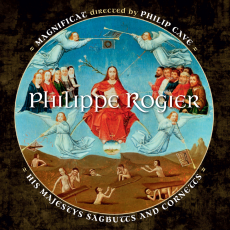
Magnificat - Philippe Rogier - All Music
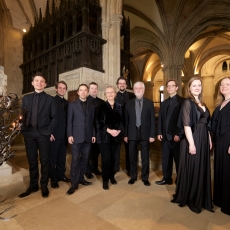
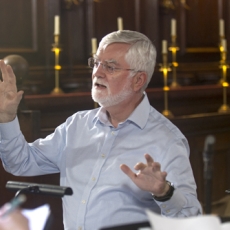
Philippe Rogier was a Fleming who was brought to Spain in 1572, when he was about 11, to sing in the chapel choir of King Philip II. He died young, at age 35, and many of his works were lost in the Lisbon earthquake of 1755. For these reasons his work remained obscure in the general 20th century rediscovery of Renaissance music, but more than 200 of his works survived, some of them in manuscripts from as far away as Mexico. The British group Magnificat and conductor Philip Cave undertake an admirable effort to explore the music of this composer, whose style included elements of both Venetian polychoral music and classic Franco-Flemish polyphony. Sometimes, as in the two spectacular motets that close out this album, the same piece could contain both, with multiple choirs alternating polyphonic structures. Magnificat delivers clear, stirring performances, with the brass and wind instruments of His Majesty's Sagbutts and Cornetts artfully deployed in arrangements that bring out the basic structure of the music. The main event here is a triple-choir work, the Missa Domine dominus noster, with an assured handling of the large forces that puts this unknown piece on a par with other unusually large pieces like the Tallis motet Spem in alium (which Magnificat has also recorded). Everything is clear in the performance, which is superbly recorded by the audiophile label Linn. The Missa Domine in virtute tua is a parody mass based on a motet by Palestrina, also recorded here and performed a cappella. A parody of Palestrina in the Gabrieli style isn't something that was common in Italy itself, and it's a tour de force intellectually as well as being luxurious and exciting to hear in its own right. For fans of the polychoral style of the late Baroque this recording is likely to come as a major revelation.
AllMusic.com
01 September 2011