The Prince Consort - Other Love Songs - The Times
31 January 2012
The TimesEmma Pomfret
With music by the National being performed by an orchestra, the song cycle is refreshing pop - and classical too.
When Kate Bush released her new album, 50 Words for Snow, the singer
drew a significant distinction: "It's not an album of pop songs; it's moving
into a more grown-up world of music." The grown-up world of Bush's concept
album - a meditation on snow - is the classical song cycle, a place where
stories and emotions slowly unfold and engulf the listener. And a place that
is proving to be a natural meeting point for pop and classical music.
Bush, of course, is in good company; P. J. Harvey's Let England Shake,
Plan B's The Defamation of Strickland Banks, and Patrick Wolf's Lupercalia
- these concept albums share territory with classical song cycles of almost
two centuries ago. Think of Dichterliebe, Schumann's romantic songs
on the theme of love, and Winterreise, Schubert's great narrative
about a lovelorn poet.
This week The Long Count, an achingly cross-genre song cycle, arrives
at the Barbican. It has music by Bryce and Aaron Dessner of the American
indie rock band the National, played by a chamber orchestra, with rock
guitars, punk singers and accompanying art installations by the British
artist Matthew Ritchie. Classically trained, Bryce Dessner has composed for
the Kronos Quartet, with Sufjan Stevens (middle man between pop and
classical) and classical music's coolest "kid", the American composer Nico
Muhly. Dessner thinks the music world is finally loosening up about
cross-genre styles. Testament to that is the singer-songwriter Tori Amos
recording on the heavyweight classical label Deutsche Grammophon (Night
of Hunters is a song cycle tribute to Chopin, Bach, Debussy, et al).
"We're post the polemics," says Dessner. "The 20th century was like a series
of pioneering expeditions - when a Schoenberg or a Seurat finds the most
extreme point they can and they plant a flag and wait for the world to find
them. Now the expression itself is interesting; not whether you're breaking
some boundary."
The British composer Emily Hall sits in the middle camp. Her training is
classical but her song series, such as Life Cycle, exploring
motherhood and written with the novelist Toby Litt, are populist, too. She's
currently composing a "quite poppy" response to Schumann's Dichterliebe.
"Song cycles are definitely an easier area in which to move between the pop
and classical worlds because a good song should stand up to different types
of voice and arrangements."
In the 1970s, Graham Johnson's gourp the Songmakers' Almanac revived the
out-of-fashion song cycle. The scene then dipped underground until, in 2009,
the NMC label commissioned an NMC Songbook.In the next couple of
years the Wigmore Hall in London will premiere a clutch of song cycles
including Stephen Hough musing on Jesuit writings and Nico Muhly setting
Purcell for the British countertenor Iestyn Davies.
Fingers crossed, Thomas Adès may write his first song cycle in more than 15
years. "But composers are wary; it's a tall order to write for voice and
piano," says John Gilhooly, artistic director at the Wigmore. Success
depends on finding the right collaborator or muse and finding text that
holds enough conviction. "There's something slightly cheeky about setting a
poem because you're vandalising it a little," points out Huw Watkins.
Watkins found inspiration in Philip Larkin's "everyday language" and his Five
Larkin Songs won the vocal category at the 2011 British Composer Awards.
"Lots of poets are touchy about songs; they feel it distorts the rhythm
they've worked at so hard."
Contemporary composers credit a new generation of fearless singers with firing
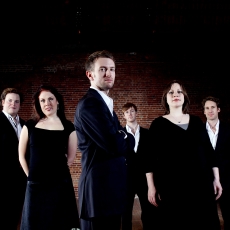
a boom in song cycles. The Prince Consort, founded by the pianist Alisdair
Hogarth and five singing friends from the Royal College of Music, are the
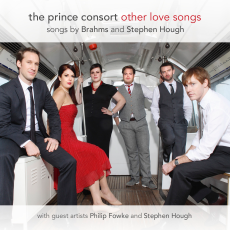
young Turks of the scene. Their recent song cycle, Other Love Songs,
composed by Stephen Hough, examined a traditional theme of love as expressed
by Brahms in his Liebeslieder, but through a new prism. The Prince
Consort's next project is a reinterpretation of Schubert songs with the jazz
pianist Jason Rebello. But Hogarth sees one hitch in the current cross-genre
vogue - the performance. "Song cycles have that Jackanory
feel; some dude at the front of a concert hall telling a story," he says.
"An intimate Schubert song cycle is never going to work in the O2."
In some ways it's odd that song cycles and their pop equivalent, the concept
album, should catch on with today's audiences. These great narrative arcs
and thematic journeys demand our full attention for well over an hour if
we're to appreciate their emotional scope. Yet within each cycle are perfect
iPod nuggets of song . The song cycle - be it classical, pop or something in
between - is the perfect musical form for now.
Related Links
The Prince Consort
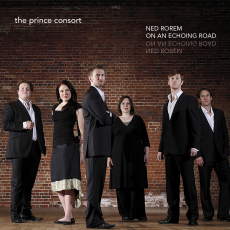
Ned Rorem – On an echoing road
Other Love Songs