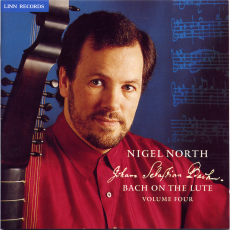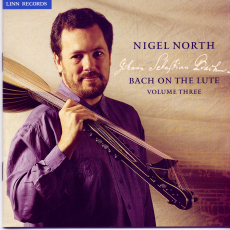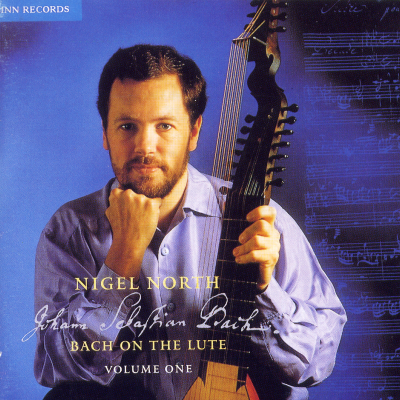
The Sonatas and Partitas For Solo Violin (BWV 1001-1006)
These wonderful masterpieces of music need no introduction. In the violinist's repertoire they are without parallel for their quality, depth of musical expression and for their technical difficulties! They were probably composed whilst Bach was in Cöthen. The autograph manuscript has a title page which reads:
Sei Solo a Violino senza Basso accompagnato.
Libro Primo da Joh.Seb.Bach. A[nn]o 1720.
In transcribing these Sonatas and Partitas for the lute I have found it interesting to consider the artistic connection between three musicians - Bach, Weiss and Pisendel. Johann Georg Pisendel was the violinist who is thought to have inspired these violin compositions and we know that he met Bach in Weimar as early as 1709. Pisendel was employed at the court in Dresden from 17120-01755 and became the leased of the famous court orchestra there in 1728. Weiss was also employed at the Dresden court (from 1719 - 1750) and both he and Pisendel would have played in the orchestra together and collaborated on many musical projects. In fact Weiss and Pisendel had rather similar careers. Not only were they amongst the most highly esteemed musicians at the court of Dresden but both spent some time in Italy in the early part of their musical lives and the influence of Italian music is clearly heard in their own compositions. Pisendel studies with Vivaldi in Venice in 1716 and Weiss spent several years in Rome. Pisendel also studied in Rome in 1717 and must have met Weiss there before they both eventually returned to the court of Dresden.
In viewing the violin Sonatas and Partitas as a set, I find that I am most aware of the Italian influence in the music which is reinforced through the link with Pisendel and his Italian training; as though Bach was aware of this when writing the set of pieces. All three Sonatas follow a similar Italian based format of a slow introductory movement (some with much written out ornamentation in Italian style) - a central fugue - a slow cantabile movement - concluding with a lighter more playful fast movement. Within this structure it is amazing how each Sonata is so very different. The strongest impression that the Sonatas have on me is how Bach dares to write larger and more extended fugues through the course of the three Sonatas. The final C major fugue (BWV 1005) is one of the longest that Bach wrote (around 10 minutes) and is written in a deeply satisfying da capo form which was to become more familiar in his late compositions.
The three Partitas are even more diverse in their form and content. The 1st Partita BWV 1002 (originally in B minor) has four dance-originated movements, each with a ‘double' or variation, but to me it also crosses the boundary into being at the same time like a Italianate four movement sonata. The 2nd Partita BWV 1004 (in D minor) is a monumental work, often described as being two pieces in one. Four basic dance movements followed by a Chaconne which, on its own, is longer than the first four dances. The 3rd Partita BWV 1006 (originally in E major) is for me the brightest of the pieces. It is the only place in the whole set which has real French dance movements - the Loure, Gavotte and Minuets in particular. © 1993 Nigel North