United States [change]
Linn Records - Classical Linn Records


Shopping Cart

0 Items in Cart
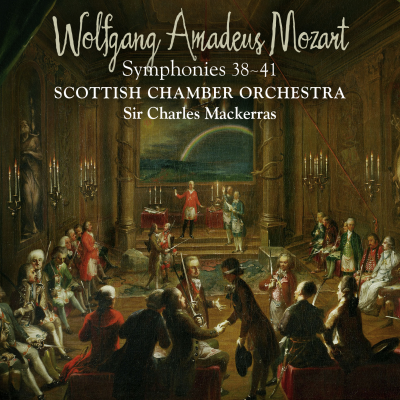
Mozart Symphonies 38 - 41

Scottish Chamber Orchestra (SCO)

Mozart Symphonies 38 - 41

...exhilarating and thrilling
CKD 308

Compact Disc

$25.00

Studio Master

FLAC 24bit 88.2kHz 2,403.9MB $29.00

Studio Master

WMA 24bit 88.2kHz 2,381.7MB $29.00

CD Quality

FLAC 16bit 44.1kHz 662.0MB $15.00

CD Quality

WMA 16bit 44.1kHz 657.8MB $15.00

MP3

MP3 320k 44.1kHz 319.1MB $12.00
Prices shown in US Dollars


Listen

Tracks: Listen and Download

Download format
Track Time Listen Track Price
1
Symphony No. 38 in D major (‘Prague’), K.504 - I Adagio - Allegro

Symphony No. 38 in D major (‘Prague’), K.504 - I Adagio - Allegro

Composer Wolfgang Amadeus Mozart
Conductor Sir Charles Mackerras
Band Scottish Chamber Orchestra
17:43 Play $6.85
2
Symphony No. 38 in D major (‘Prague’), K.504 - II Andante

Symphony No. 38 in D major (‘Prague’), K.504 - II Andante

Composer Wolfgang Amadeus Mozart
Conductor Sir Charles Mackerras
Band Scottish Chamber Orchestra
11:18 Play $5.10
3
Symphony No. 38 in D major (‘Prague’), K.504 - III Finale: Presto

Symphony No. 38 in D major (‘Prague’), K.504 - III Finale: Presto

Composer Wolfgang Amadeus Mozart
Conductor Sir Charles Mackerras
Band Scottish Chamber Orchestra
7:46 Play $3.40
4
Symphony No. 39 in E flat major, K.543 - I Adagio - Allegro

Symphony No. 39 in E flat major, K.543 - I Adagio - Allegro

Composer Wolfgang Amadeus Mozart
Conductor Sir Charles Mackerras
Band Scottish Chamber Orchestra
9:50 Play $3.40
5
Symphony No. 39 in E flat major, K.543 - II Andante con moto

Symphony No. 39 in E flat major, K.543 - II Andante con moto

Composer Wolfgang Amadeus Mozart
Conductor Sir Charles Mackerras
Band Scottish Chamber Orchestra
8:02 Play $3.40
6
Symphony No. 39 in E flat major, K.543 - III Minuetto (Allegretto) & Trio

Symphony No. 39 in E flat major, K.543 - III Minuetto (Allegretto) & Trio

Composer Wolfgang Amadeus Mozart
Conductor Sir Charles Mackerras
Band Scottish Chamber Orchestra
4:22 Play $1.70
7
Symphony No. 39 in E flat major, K.543 - IV Finale: Allegro

Symphony No. 39 in E flat major, K.543 - IV Finale: Allegro

Composer Wolfgang Amadeus Mozart
Conductor Sir Charles Mackerras
Band Scottish Chamber Orchestra
7:49 Play $3.40
8
Symphony No. 40 in G minor, K.550 - I Molto allegro

Symphony No. 40 in G minor, K.550 - I Molto allegro

Composer Wolfgang Amadeus Mozart
Conductor Sir Charles Mackerras
Band Scottish Chamber Orchestra
7:07 Play $3.40
9
Symphony No. 40 in G minor, K.550 - II Andante

Symphony No. 40 in G minor, K.550 - II Andante

Composer Wolfgang Amadeus Mozart
Conductor Sir Charles Mackerras
Band Scottish Chamber Orchestra
13:25 Play $5.10
10
Symphony No. 40 in G minor, K.550 - III Menuetto: Allegretto

Symphony No. 40 in G minor, K.550 - III Menuetto: Allegretto

Composer Wolfgang Amadeus Mozart
Conductor Sir Charles Mackerras
Band Scottish Chamber Orchestra
4:04 Play $1.70
11
Symphony No. 40 in G minor, K.550 - IV Finale: Allegro assai

Symphony No. 40 in G minor, K.550 - IV Finale: Allegro assai

Composer Wolfgang Amadeus Mozart
Conductor Sir Charles Mackerras
Band Scottish Chamber Orchestra
9:27 Play $3.40
12
Symphony No. 41 in C major (‘Jupiter’), K.551 - I Allegro vivace

Symphony No. 41 in C major (‘Jupiter’), K.551 - I Allegro vivace

Composer Wolfgang Amadeus Mozart
Conductor Sir Charles Mackerras
Band Scottish Chamber Orchestra
11:28 Play $5.10
13
Symphony No. 41 in C major (‘Jupiter’), K.551 - II Andante cantabile

Symphony No. 41 in C major (‘Jupiter’), K.551 - II Andante cantabile

Composer Wolfgang Amadeus Mozart
Conductor Sir Charles Mackerras
Band Scottish Chamber Orchestra
10:27 Play $5.10
14
Symphony No. 41 in C major (‘Jupiter’), K.551 - III Menuetto: Allegretto

Symphony No. 41 in C major (‘Jupiter’), K.551 - III Menuetto: Allegretto

Composer Wolfgang Amadeus Mozart
Conductor Sir Charles Mackerras
Band Scottish Chamber Orchestra
5:03 Play $3.40
15
Symphony No. 41 in C major (‘Jupiter’), K.551 - IV Molto allegro

Symphony No. 41 in C major (‘Jupiter’), K.551 - IV Molto allegro

Composer Wolfgang Amadeus Mozart
Conductor Sir Charles Mackerras
Band Scottish Chamber Orchestra
11:30 Play $5.10
Total Running Time 139 minutes Purchase all tracks 
$15.00 
Prices shown in US Dollars
This double album of Mozart's last four Symphonies will follow from the orchestra's acclaimed and popular collaborations with Sir Charles Mackerras: Mozart Requiem and Bartók and Kodály.


The SACD layer is both 5.1 channel and 2 channel
The Studio Master files are 88.2kHz/24-bit

Produced by James Mallinson

Recorded at City Halls, Glasgow, UK from 3-9 August 2007
Engineered by Philip Hobbs
Edited, mixed and mastered by Julia Thomas, Finesplice, UK

Read a programme note by Sir Charles Mackerras

This release was part funded by the bequest of Isobel M Crawford.  The Scottish Chamber Orchestra is pleased to dedicate the recording to her memory, with sincere gratitude. 


Mozart Symphonies

Between 1764 and 1780 Mozart, based in Salzburg but frequently touring Europe, composed nearly 60 symphonies.  (There are more of them than the traditional 41, even allowing for the fact that not all 41 are by Mozart!)  That rate of composition averaged more than three symphonies a year.  In January 1781 Mozart was ordered by his employer, the Archbishop of Salzburg, to proceed to Vienna, where he contrived to have himself fired and then defied his father's orders to return home.  He was 24 years old.  An occasional tour aside, Mozart remained in Vienna until his death in December 1791.  During that decade he composed six symphonies.  What accounts for the precipitous drop in symphony production? 

Among various factors possibly bearing on this change in Mozart's priorities, two stand out.  The first of these was his need to support himself and his family as a freelance musician at a time when most musicians could achieve that goal only by working for the Church or by wearing livery in the service of a noble family.  Judging from his activities and the catalogue of his works during his final decade, Mozart most wanted and needed to compose operas, piano concertos, and domestic chamber music involving a keyboard instrument.  Operas were the most visible, prestigious, and lucrative works possible at the time and, if successful, the surest road to broad international recognition.  Besides, Mozart was a theatre person to his bones.  Piano concertos enabled Mozart to appear before his patrons at (mostly private) concerts, showing himself to best advantage as composer, keyboard virtuoso, orchestra leader, and impresario.  Domestic keyboard works provided fodder for his teaching activities, which were mandated by economic need, as well as income from Viennese music publishers, with whom Mozart was on intimate terms and from whom he sometimes cadged advances for not-yet-written music.

The second factor bearing on Mozart's late symphonies was the ongoing evolution of the styles and functions of symphonies in European musical life, of which his own output provides a striking example, articulated as it was by his move from provincial Salzburg to cosmopolitan Vienna.  Symphonies of the 1760s and 70s were more often relatively brief, usually less than ten minutes and frequently in three movements.  They were most commonly employed in framing or articulating functions: as overtures in theatre, church or chamber, and as entr'actes or interludes as well as concluding gestures in the same venues.  That is to say, although they were essential to those occasions they were not the main events which they were enjoined from upstaging.  However beautiful, novel or clever such symphonies may have been, they were generally meant to be easily performed and easily listened to - and in fact, Haydn's and Mozart's symphonies were occasionally criticized for overreaching those constraints.  A report of 1792 about the Hamburg Orchestra, for instance, said that the group's members were "such good, strong players and keep so calm that they perform correctly and at sight without error," but that when reinforced to play the latest symphonies, they would be "heroes to venture to play Haydn's symphonies (let alone Mozart's) at sight".

After Mozart had settled in Vienna and turned his attention to other genres, he found he could fill his need for symphonies in his concerts by programming works of other composers while also recycling some of his own symphonies from the 1770s, which were unknown there and which he had his father send from Salzburg.  That being the case, why did Mozart write symphonies in Vienna?  The answer seems to be, at least in part, that the best new symphonies were increasingly of a longer, more complex, more serious type - works that were gradually moving the symphony from the periphery to centre stage.  Indeed, when eight years after Mozart's death a Hamburg publisher brought out first editions of four of his Salzburg symphonies, a puzzled reviewer remarked that "... there is nothing more to be said of these symphonies, except that they - although not without good value and content - are really just quite ordinary orchestral symphonies, without any conspicuous traits of originality or novelty, and without any special artistic diligence.  Thereby one can quite clearly recognise youthful work, because they are on the whole so very plain...." Knowing, as we do, that Mozart prided himself on tailoring his music to the performers and occasions of the moment, we realise that it was lack of historical perspective that caused the reviewer to attribute to the composer's youth something that was probably more a result of a change in assignment, so to speak. 

Symphonies circulated around Europe primarily in hand-written copies.  Unlike Paris, Amsterdam and London, with their flourishing music publishing industries, in Vienna symphonies were not published prior to the 1780s.  Earlier, Joseph Haydn's symphonies had circulated exclusively in pirated manuscripts, since Haydn's boss, Prince Eszterhazy, owned the proprietary rights to his employee's music.  In 1779-80, however, Haydn renegotiated his contract to allow him to sell his own music.  Whether these two developments were directly or indirectly related is not clear, but between 1782 and 1787 the Viennese firm Artaria (also Mozart's principal publisher) brought out editions of seventeen symphonies by Joseph Haydn, three by Michael Haydn, three by Antonio Rosetti, and one by Pleyel, while Kozeluch self-published six symphonies.  Mozart joined the trend in 1785, when Artaria published his B flat symphony, K.319, written in Salzburg, and his D major (‘Haffner') symphony K.385, written for Salzburg - two excellent but by-then conservative works. 

So why did Mozart write symphonies in Vienna?  Perhaps many of the symphonies he had previously relied on began to sound old-fashioned or too simple.  The ‘Haffner' symphony was commissioned from Salzburg, although Mozart was happy to reinforce its orchestration for use in Vienna.  The ‘Linz' symphony was written in and for ‘Linz' when, returning from Salzburg to Vienna in 1783, needing to put on a pair of concerts with the private orchestra of his melomaniacal patrons, the Counts Thun, father and son, and finding himself without a single symphony in his baggage, Mozart quickly scribbled one.  Scribbled?  Hardly!  The ‘Linz' is the first of the completely modern, grand symphonies in which Mozart - his back to Salzburg and his face to Vienna - acknowledged and responded to the new symphony aesthetic.  After that, there was no turning back, as Mozart's last four symphonic masterpieces amply attest. 

The so-called ‘Prague' symphony was composed for a series of Advent concerts in Vienna.  Soon afterwards Mozart took off for Prague, where the Symphony's brilliant success made it into a canonic work and provided its nickname.  As reported in 1798 by the Prague school-master Franz Niemetschek, who had met Mozart and would become his biographer and help to educate his orphaned sons, the ‘Prague' Symphony, "played with great élan and fire, so that the very soul is carried to sublime heights...is still always a favourite in Prague, although it has no doubt been heard a hundred times". 

The final three symphonies, completed in the summer of 1788, were presumably intended, following Mozart's usual methods for wringing maximum income from his music in an era before the existence of copyright laws, in the first instance for subscription concerts in the autumn of that year, then for sale in manuscript to a small circle of faithful patrons, and finally, when the novelty and exclusivity had faded, for publication.  That there were three symphonies was probably not fortuitous, as opuses most often comprised three works, or multiples of three, in the same genre.  Alas for Mozart's plans, in February 1788 Austria had entered an ill-fated war against Turkey, the nobility were mostly either fighting at the front or cowering on their country estates, the economy sagged, theatres were closed and cultural life slowed to a crawl.  The need for monumental new symphonies evaporated.  Mozart turned his attention to his upper-middle class friends and patrons and the kinds of chamber music they liked and could afford. 

The theatres, halls, music rooms and salons in which Mozart performed his symphonies were small compared to most modern concert halls.  His orchestras were correspondingly smaller than a full symphony orchestra as well, and his listeners were positioned correspondingly closer to the musicians.  (At private concerts they would sometimes play along, or sit or stand in the orchestra to observe more closely.)  These factors meant that orchestral music must have sounded more intimate, nuanced and transparent than we often hear in large modern halls with enlarged performing forces.  How delightful, then, that the close microphones and digital technologies of a modern CD of Mozart's last four symphonies performed by the Scottish Chamber Orchestra conducted by Sir Charles Mackerras, seem to restore some of the intimacy, nuance and transparency we imagine that Mozart's audiences enjoyed. 

© Neal Zaslaw, 2007


A Note from Sir Charles Mackerras 

The four symphonies presented here show Mozart at his most diverse, both in musical content and in orchestral colouration.  At least two of them have a distinctly operatic flavour.  The Prague' Symphony No 38, K.504, performed in that city at the height of the 'Figaro mania', contains many of the sounds and moods we associate with that opera and perhaps even more with Mozart's later Prague opera, Don Giovanni.  Consider the solemn slow introduction which ends with a poignant chromatic passage in D minor so like a cry of pain.  This gives way to an ingenious three part Allegro theme which is repeated over and over again in different contrapuntal combinations (though never once identically).  This is perhaps the most intellectual movement of any of Mozart's symphonies, save perhaps the last pages of the ‘Jupiter'.  The Andante and the mercurial Finale present so many shades and moods, changing continually from major to minor, that they remind one irresistibly of the big finales in Figaro and Don Giovanni.

Similarly, the next symphony, Symphony No 39 in E flat, K.543, has an orchestral colour unique in Mozart's symphonies.  This comes from his use of clarinets rather then traditional oboes as the main woodwind instrument.  Mozart had already used the clarinet in the key of E flat to gorgeous effect in both da Ponte operas (consider much of the music associated with the Figaro Countess and Donna Elvira). He had also used the softer colours of the clarinet in his E flat Piano Concerto, K.482. However, the instrument pervades the whole symphony and there is hardly a phrase where its limpid quality does not add entirely new colours to Mozart's symphonic palette.  The immense range of the clarinet (because of its cylindrical bore) is used to great effect in the trio of the minuet in which the first plays a serene melody high up in its register, while the 2nd chortles away on an accompaniment two octaves lower.

The Symphony No 40 in G minor, K.550, has been described severally as "frantic, anguished neuroticism" (H.C Robbins Landon) and of "Grecian lightness and grace" (Robert Schumann). The outer movements indeed express a nervous quality not present in Mozart's minor key piano concertos or in his earlier 'Sturm und Drang' 'little' G Minor Symphony, K.183.  Note how the consoling second subject in the relative major key sinks to the depth of despair in the recapitulation, as it refuses all comfort in the home minor key.  This is especially true of the Finale where the development section starts off with an almost Schönbergian tone row and then leads the listener through a bewildering number of foreign keys until finally it lands back in its original G minor.

Mozart first composed this tragic work featuring the plangent tones of the oboes against the throbbing of the strings. However, he re-wrote the woodwind parts to include his favourite clarinets.  In the slow movement we again hear the clarinets in the key of E flat, while in the trio of the minuet the oboes are allowed to come to the fore in a sunny G major.

Mozart's last symphony, Symphony No 41 in C major, K.551, later dubbed ‘Jupiter',  probably because of its majestic opening movement or its 'jovial' and 'Titanic' finale, seems to sum up Mozart's whole symphonic production with its subtlety and grandeur. But amidst the fanfares of trumpets and drums of those outer movements, Mozart still has one new colour up his sleeve: the muted violins of the slow 2nd movement. Mozart hardly ever used this colour in a symphony and yet the Master says ‘farewell' to the symphonic form by means of a gorgeous veil over the sound, investing a special quality in it which even pervades the great C Major climax in the second part of the movement.  A truly original colour in this final symphony of endless tonal variety. 

© Sir Charles Mackerras, 2007

Mackerras' Mozart named CD of the Week
26 March 2008
BBC Radio 3's CD Review highlights latest SCO album
more >>

Two Linn Records albums in the UK Classical Charts
17 March 2008
Dunedin Consort and Sir Charles Mackerras in the top 20
more >>

Mackerras's Mozart is number seven in the UK classical charts
10 March 2008
new SCO album is a non-mover at no.7
more >>

Sir Charles Mackerras on BBC Radio 3
25 February 2008
hear interviews from the Mozart Symphonies recording sessions
more >>

BBC Radio 3's CD Review discusses downloading
18 February 2008
Andrew McGregor and James Jolly enthuse about downloading
more >>

Early praise for Mozart Symphonies
04 February 2008
Two five-star reviews for the new Scottish Chamber Orchestra recording
more >>

Be the first to write a recommendation.

Please Login or Register to write a recommendation.
MusicWeb International
Recording of the Month: "...a benchmark of our time."
more >>

Expansion
'Mozart vive!'
more >>

Opus Musica
Disc of the Month
more >>

hi-fi +
4½ Stars
Quite brilliant...truly majestic.
more >>

Early Music Review
...powerful, individual readings.
more >>

Klassik.com
5 Stars
So gelingt gleichsam unter der Hand Mozart-Interpretationen, die man zu den überzeugendsten dieser Sinfonien zählen darf.
more >>

Gramophone
Every bit as good as you would expect. Gramophone Recommended.
more >>

HiFi News
Album of the Month
more >>

The Ticket (Ireland)
4 Stars
simply irresistible
more >>

audiophile.no
5 Stars
Linn Records har spilt inn Mozart sine fire siste symfonier. Til denne oppgaven har de selvfølgelig håndplukket Scottish Chamber Orchestra dirigert av Sir Charles Mackerras.
more >>

The Guardian
5 Stars
Mackerras's Mozart is full of the life-affirming vitality more often associated with youth
more >>

International Record Review
A vibrant and utterly gripping appearance from first moment to last, and all caught in sound that is amazingly lifelike. No Mozartian should be without these inspiring discs.
more >>

Audiophile Audition
4 Stars
some spectacular readings in first class sonics
more >>

Atlanta Audio Society
...Performances that may well take their place among the best on record.
more >>

The Times
5 Stars
among the very best recordings of these four symphonies on disc
more >>

BBC Music Magazine
5 Stars
Orchestral Disc of the Month: "exhilarating ... ravishing"
more >>

The List
4 Stars
exciting and thrilling
more >>

MusicOMH.com
5 Stars
Anyone who loves classical music has to own this recording...this will be one of the year's finest recordings.
more >>

Independent on Sunday
...Few recordings have the authority and warmth of this release.
more >>

The Observer
Mozart's last four symphonies...have rarely shone as luminously as in these uplifting accounts.
more >>

The Herald
5 Stars
This will have you out of your seat with excitement...a Mozart set to match any.
more >>

The Week
5 Stars
...Astonishing...
more >>

Financial Times
...Sheer vitality...
more >>

BBC Online
This recording should have you stampeding to the record shops.
more >>

Metro
Pure delight.
more >>

SA-CD.net
5 Stars
I can't imagine Mozart being better performed...a wonderful set that will remain long in the memory.
more >>

The Sunday Times
5 Stars
Classical CD of the Week: Possibly their finest record to date...I don't know more enthralling accounts of the G minor and the Jupiter on disc.
more >>

The Guardian
5 Stars
These are the finest versions of Mozart's greatest symphonies to have appeared on disc in years.
more >>

ClassicalSource.com
Beautifully judged...exciting listening
more >>

ClassicsTodayFrance.com
4½ Stars
An outstanding review for the orchestral recording
more >>