Produced by
Ben Turner
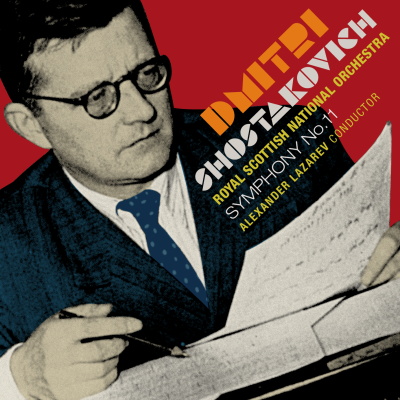
In the summer of 1956 Soviet schoolchildren found that their history exams were cancelled. The reason was that Nikita Khrushchev had made a 'secret speech' in February of that year to the 20th Communist Party Conference, denouncing Stalin and what he euphemistically termed the 'personality cult'. Suddenly history was not what every child and young adult in the Soviet Union had been taught it was, and an army of authors was drafted in to re-write it (the process was to be repeated 35 years later with glasnost and the collapse of Communism and the Soviet Union).
Shostakovich had little to unlearn, however. He had grown up in a family with highly developed social and political awareness; he had had abundant contact with the free-thinking and not-so-free-thinking intelligentsia in the comparatively undoctrinaire 1920s; and he had been at the sharp end of Stalinist repression for more than 20 years, including career-threatening disgraces in 1936 and 1948. He also kept himself up to date with the rumblings of dissension in Poland and Hungary in the aftermath of Khrushchev's speech (the Poles won relative autonomy, especially in the arts, while the Hungarians were crushed).
He then did a curious thing. In the following year he composed a symphony commemorating a famous atrocity in pre-communist Russia – the original Bloody Sunday in fact - whose events are worth recapping. 1905 was a year of revolutionary upheaval. On 9 January (22 January by the Western calendar) a crowd of between 5,000 and 16,000 workers and their families converged on the Winter Palace in St. Petersburg, unarmed, carrying icons and portraits of the Tsar and singing hymns, intending to present a petition to Nicholas II, appealing over the heads of local officials and bosses to alleviate the misery that overdue industrial development was inflicting on them. The Tsar had been advised to leave the capital and no one had been delegated to receive the petition. After the customary warning-shots failed to disperse the crowd the authorities lost their nerve, resorting to cavalry charges and infantry fire which left some 200 dead and 500 wounded (the figures were wildly exaggerated by the Western press at the time and by the Soviets in later years). Word spread that the Tsar, the 'Little Father', had betrayed his people, and this single event did more to revolutionize the workers of Russia than decades of agitation and propaganda had done.
The Eleventh Symphony was, then, an act of apparently politically correct commemoration, bolstered by Shostakovich's quotation within it of some nine revolutionary songs and his accessible, film-score-ish idiom. All this seemed to represent a backtracking from the complexities of his Tenth Symphony of 1953 in a conscious attempt to curry favour with authority. This was, after all, the kind of symphony officials had been asking of him for years and to all intents and purposes as an unimpeachably conformist way of celebrating the 40th anniversary of the 1917 Bolshevik revolution.
That's how it was initially received -- with delight by advocates of Socialist Realism and with dismay by its detractors, in Russia and outside.
It's possible that Shostakovich intended it that way. But only if nine out of ten of those who knew him at the time are deceiving themselves. Their story, only safe to tell since glasnost, backs up the comments first aired in 1979 by Solomon Volkov in his controversial book Testimony, to the effect that the Eleventh Symphony is an Aesopian fable, 'really' commenting on the suppression of the Hungarian uprising. This is the line many today would probably like to believe, and the current burden of hearsay evidence tends to support it. But a lawyer for the other side would have little difficulty in finding inconsistencies and mendacities in many of Shostakovich's character witnesses; the habit of not letting truth get in the way of a good story is as deeply ingrained in Russia as anywhere and was never confined to the Stalinists; the urge to cast Shostakovich as a crypto-dissident is not the same thing as proof that he was one.
And there is another possibility to consider: that Shostakovich may have been speaking against any kind of state repression, and that the power of his statement comes more from how it is targeted (musically speaking) than from what it is targeted against. The nature of the target, or the lack of it, is likely to remain a matter for individual listeners to decide.
The Eleventh Symphony is sometimes dubbed 'a film-score without the film', and it is true that the music sometimes moves at the rate of a camera panning across a vast open space. So it is in The Palace Square, which seems to evoke dawn on the bright but bitterly cold morning of Bloody Sunday itself. The opening musical ideas are the only ones in the symphony that are not quotes or derivations from revolutionary songs, and they will prove crucial to the overall design. The square itself is memorably depicted in glassy open fifths on the strings, punctuated by ominous timpani triplets that will become a kind of leitmotif for the Crowd. Quiet Mahlerian trumpet fanfares then seem to stand for the warning signals before the infantry open fire. Flutes give out the song 'Listen' ('Like an act of betrayal, like the conscience of a tyrant,/ the autumn night is dark') and cellos and basses soon follow with 'The Prisoner' ('The night is dark... the wall of the prison is strong').
The Ninth of January is a brutal scherzo-substitute movement in two sections, depicting the assembly of the crowds and the massacre itself. Over a variant of the Crowd leitmotif, clarinet and bassoon intone part of the song 'O thou, our Tsar, little father!'; the later brass theme is from the beginning of the same poem: 'Bare your heads' [a traditional mark of respect for the Tsar].
For the third movement, In Memoriam, Shostakovich turned to one of the best known of all revolutionary songs: 'You fell as a victim', familiar from many a Soviet film soundtrack when the scene is the funeral of a martyr to the communist cause. In the aftermath of the long, gloomy opening, the violins follow with the opening phrase of 'Welcome, the free world of liberty', msucially a fine example of Shostakovich's mastery of Schubertian major-key pathos.
Three more revolutionary songs feature in the Finale, which is subtitled The Tocsin [Alarm-bell]. These are 'Rage, you tyrants', 'Boldly, comrades, keep in step!' and 'Enemy whirlwinds blow against us', the last being set to the famous Polish tune, 'Warschawianka'. All sorts of cyclic reminiscences from earlier movements are built into this finale, along with a quote from an operetta about the events of 1905 by one of Shostakovich’s most gifted pupils, Georgy Sviridov. Finally the warning signals seem to be directed, allegorically and prophetically, towards the future, and the Crowd theme dominates the symphonic canvas like a swarm of vengeful bees. The four movements are played without a break.
09 May 2013
to
09 May 2013
Scotland
Music Hall, Aberdeen, Scotland
Naked Classics: Wagner's Ring
10 May 2013
to
10 May 2013
Scotland
Usher Hall, Edinburgh Scotland UK
Naked Classics: Wagner's Ring
11 May 2013
to
11 May 2013
Scotland
Royal Concert Hall, Glasgow Scotland UK
Naked Classics: Wagner's Ring
17 May 2013
to
17 May 2013
Scotland
Usher Hall, Edinburgh Scotland UK
Choral Classics: Elijah
18 May 2013
to
18 May 2013
Scotland
Royal Concert Hall, Glasgow Scotland UK
Choral Classics: Elijah
23 May 2013
to
23 May 2013
Scotland
Caird Hall, Dundee Scotland UK
Dvorák Cello Concerto
24 May 2013
to
24 May 2013
Scotland
Usher Hall, Edinburgh Scotland UK
Dvorák Cello Concerto
25 May 2013
to
25 May 2013
Scotland
Royal Concert Hall, Glasgow Scotland UK
Dvorák Cello Concerto
31 May 2013
to
31 May 2013
Scotland
Usher Hall, Edinburgh Scotland UK
Oundjian & Benedetti Gala Concert
01 June 2013
to
01 June 2013
Scotland
Royal Concert Hall, Glasgow Scotland UK
Oundjian & Benedetti Gala Concert
09 June 2013
to
09 June 2013
Scotland
Dovecot Studios, Edinburgh Scotland UK
Classical Strings
14 June 2013
to
14 June 2013
Scotland
Usher Hall, Edinburgh Scotland UK
Qatar UK 2013 Year of Culture Celebration
16 June 2013
to
16 June 2013
Scotland
St Mary's Cathedral - 2.30pm, Glasgow Scotland UK
Classical Strings
06 September 2013
to
06 September 2013
Scotland
Kelvingrove Art Gallery & Museum, Glasgow Scotland UK
An Evening of Music at Kelvingrove
19 October 2013
to
19 October 2013
Scotland
Royal Concert Hall - 3pm & 7.30pm, Glasgow Scotland UK
The Wizaerd of Oz
24 October 2013
to
24 October 2013
Scotland
Caird Hall, Dundee Scotland UK
Søndergård Conducts Brahms Four
25 October 2013
Scotland
Usher Hall, Edinburgh Scotland UK
Søndergård Conducts Brahms Four
26 October 2013
to
26 October 2013
Scotland
Royal Concert Hall, Glasgow Scotland UK
Søndergård Conducts Brahms Four
07 November 2013
to
07 November 2013
Scotland
Music Hall, Aberdeen Scotland UK
Vaughan Williams' Fifth
08 November 2013
to
08 November 2013
Scotland
Usher Hall, Edinburgh Scotland UK
Naked Classics: Vaughan Williams' Fifth
09 November 2013
to
09 November 2013
Scotland
Royal Concert Hall, Glasgow Scotland UK
Naked Classics: Vaughan Williams' Fifth
15 November 2013
to
15 November 2013
Scotland
Usher Hall, Edinburgh Scotland UK
Britten's War Requiem
16 November 2013
to
16 November 2013
Scotland
Royal Concert Hall, Glasgow Scotland UK
Britten's War Requiem
22 November 2013
to
22 November 2013
Scotland
Usher Hall, Edinburgh Scotland UK
Lugansky plays the Emperor
23 November 2013
to
23 November 2013
Scotland
Royal Concert Hall, Edinburgh Scotland UK
Lugansky plays the Emperor
30 November 2013
to
30 November 2013
Scotland
Royal Concert Hall, Glasgow Scotland UK
St Andrew's Party with Phil & Aly
05 December 2013
to
05 December 2013
Scotland
Royal Concert Hall, Glasgow Scotland UK
The Nutcracker
06 December 2013
to
06 December 2013
Scotland
Usher Hall, Edinburgh Scotland UK
The Nutcracker
13 December 2013
to
13 December 2013
Scotland
Usher Hall, Edinburgh Scotland UK
Benedetti and Elschenbroich Play Brahms
14 December 2013
to
14 December 2013
Scotland
Royal Concert Hall, Glasgow Scotland UK
Benedetti and Elschenbroich Play Brahms
19 December 2013
to
19 December 2013
Scotland
Music Hall, Aberdeen Scotland UK
RSNO Christmas Concert
20 December 2013
to
20 December 2013
Scotland
Caird Hall, Dundee Scotland UK
Christmas Concert
21 December 2013
to
21 December 2013
Scotland
Royal Concert Hall - 2pm & 6pm, Glasgow Scotland UK
Christmas Concert
22 December 2013
to
22 December 2013
Scotland
Usher Hall - 3pm, Edinburgh Scotland UK
Christmas Concert
02 January 2014
to
02 January 2014
Scotland
Royal Concert Hall, Glasgow Scotland UK
Handel's Messiah
30 January 2014
to
30 January 2014
Scotland
Music Hall, Aberdeen Scotland UK
John Lill's 70th
31 January 2014
to
31 January 2014
Scotland
Usher Hall, Edinburgh Scotland
John Lill's 70th
01 February 2014
to
01 February 2014
Scotland
Royal Concert Hall, Glasgow Scotland UK
John Lill's 70th
07 February 2014
to
07 February 2014
Scotland
Usher Hall, Edinburgh Scotland UK
Oundjian Conducts Walton
08 February 2014
to
08 February 2014
Scotland
Royal Concert Hall, Glasgow Scotland UK
Oundjian Conducts Walton
14 February 2014
to
14 February 2014
Scotland
Usher Hall, Edinburgh Scotland UK
Romantic Valentine's Classics
15 February 2014
to
15 February 2014
Scotland
Royal Concert Hall, Glasgow Scotland UK
Romantic Valentine's Classics
28 February 2014
to
28 February 2014
Scotland
Usher Hall, Edinburgh Scotland UK
Symphonie fantastique
01 March 2014
to
01 March 2014
Scotland
Royal Concert Hall, Glasgow Scotland UK
Symphonie fantastique
05 March 2014
to
05 March 2014
Scotland
Caird Hall, Dundee Scotland UK
Søndergård Conducts Beethoven Five
08 March 2014
to
08 March 2014
Scotland
Royal Concert Hall, Glasgow Scotland UK
The Music of John Williams
14 March 2014
to
14 March 2014
Scotland
Usher Hall, Edinburgh Scotland UK
Søndergård Conducts Turangalîla
15 March 2014
to
15 March 2014
Scotland
Royal Concert Hall, Edinburgh Scotland UK
Søndergård Conducts Turangalîla
21 March 2014
to
21 March 2014
Scotland
Usher Hall, Edinburgh Scotland UK
Pictures at an Exhibition
22 March 2014
to
22 March 2014
Scotland
Royal Concert Hall, Glasgow Scotland UK
Pictures at an Exhibition
27 March 2014
to
27 March 2014
Scotland
Caird Hall, Dundee Scotland UK
Oundjian Conducts Ein Heldenleben
28 March 2014
to
28 March 2014
Scotland
Usher Hall, Edinburgh Scotland UK
Oundjian Conducts Ein Heldenleben
29 March 2014
to
29 March 2014
Scotland
Royal Concert Hall, Glasgow Scotland UK
Oundjian Conducts Ein Heldenleben
11 April 2014
to
11 April 2014
Scotland
Usher Hall, Edinburgh Scotland UK
Shankar Plays Shankar
12 April 2014
to
12 April 2014
Scotland
Royal Concert Hall, Glasgow Scotland UK
Shankar Plays Shankar
25 April 2014
to
25 April 2014
Scotland
Usher Hall, Edinburgh Scotland UK
Tchaikovsky's First Piano Concerto
26 April 2014
to
26 April 2014
Northern Ireland
Royal Concert Hall, Glasgow Scotland UK
Tchaikovsky's First Piano Concerto