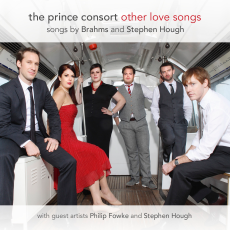
The Prince Consort - Other Love Songs - Somewhere Boy
Reading the thoughts of Susan Tomes on the subject of the Guardian's airbrushing of classical music a few days ago, I pondered the marginalisation of classical music, and in particular of new classical music. There has been a dichotomy between classical and popular music for centuries, of course, though by and large the best music has persisted while the dross has fallen by the wayside, as far as we can tell. Still, contemporary classical music is a minority interest now more than ever.
That is the case for several reasons: first of all, popular music has diversified in so many directions over the past century, especially since the age of recording, that it swamps the marketplace. Not just all of the different types of mainstream pop music, but also jazz and blues and big band and swing, gospel, world music (that horrible catch-all phrase), new age (fingers-down-throat time). The list is endless.
The divergent paths taken by classical composers in the last century are also pertinent. Atonality and serialism seem an inevitable resting place of classical music. They are a dead end. Much great music has been composed within these disciplines, and happily the view that dismisses the music of the Second Viennese School as valueless is now a dissenting one, but atonal music is a bridge with nothing on the other side. It is an extreme. Since Schoenberg et al. deconstructed the principles of tonality early in the last century, there has been no single thrust driving classical music towards something original. Every so often a genius like Stravinsky will come along to shake things up, but as a rule composers today either write tonal music (which may be dismissed as reactionary or derivative, all the avenues of tonality having been explored exhaustively over the course of the past several centuries) or atonal music (which practically nobody wants to listen to).
When Britten's Peter Grimes was premiered in June 1945, it almost automatically became a part of the operatic canon. Today, it is performed in many different productions throughout the world every year. It is difficult to imagine any piece of serious classical music having a similar impact today.
Now, some self-interrogation. How much classical music do I know well that was composed in, say, the last twenty years? A fair amount of the music of Thomas Adès, for one thing. He is a rare beast, a composer who has not abandoned tonality but writes with a distinct and individual voice, his music assimilating with conviction diverse forms of popular and older classical music. (In the interests of fairness, I should state that there are many composers around today with original things to say, it's just that Adès is the one who has got through to me most.) Also Nicholas Maw's beautiful, Brahmsian violin concerto, and, coming from a similar direction, a certain amount of the more recent music of Robin Holloway, who writes with the language of romanticism tinged with the modern. All in all, not a great deal compared to what I know of the composers of years gone by, and only a fraction of the volume of presumably fabulous music being written by living composers in Britain alone.
The thing is, Bach and Beethoven and Brahms can all be viewed with hindsight, and we can understand their work in the context of general musical trends. It's much more difficult to get a handle on people writing today, to work out where they come from and what they have to tell us, especially as the influences that inform their own music must inevitably be more diverse than those of their predecessors.
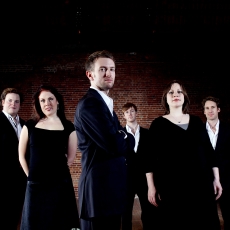
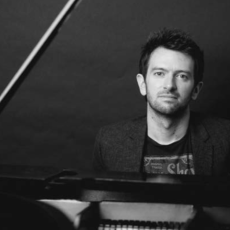
On the theme of getting to know new music, I will relate a recent happy discovery. A week ago I went to a piano recital by the mercurial Stephen Hough at the Wigmore Hall, where he played sonatas by Beethoven, Scriabin and Liszt, and premiered a new sonata by himself, which he talks about in conversation here. After the concert Hough was gently probed by Jessica Duchen, and those of us who had stayed behind were treated to another premiere, of Hough's song cycle Other Love Songs, written for the Prince Consort.
Other Love Songs was written to be programmed between Brahms' two sets of Liebeslieder-Walzer, some of the most frustrating music Brahms wrote, and some of the hardest to love, at any rate for me. Hough's cycle sets a catholic selection of texts, from Julian of Norwich and the Gospel of John, Harlem Renaissance poets Claude McKay and Langston Hughes, Laurence Hope (Adela Florence Nicolson) and A.E. Housman. They all treat love between people of the same sex, though not in all cases romantic love. In the spirit of otherness, the accompaniment is not for piano four hands like the Brahms, but for piano three hands (the upper pianist uses his right hand only).
One reason why this music appeals more than the Brahms is that Hough's textures are sparser. The Liebeslieder are part-songs for the potentially stodgy combination of vocal quartet and piano duet, while Hough's are generally solo songs, giving individual members of the vocal group their chance to star, with a couple of duets and two larger (but still sensitively scored) ensemble pieces at the end. This helps to create variety. The Brahms waltzes blur into one another, but Hough keeps you on your feet.
I find it very difficult to write about modern composers without referring to composers of the past. I'm sure that's indicative of the paucity of my descriptive abilities, but it may perhaps have a positive application in helping readers to imagine what the music sounds like. There are so many influences audible in Other Love Songs, from the ecstasy of Messiaen in the soprano/mezzo duet ‘All Shall Be Well' to the inevitable echoes of the great twentieth-century British composers of art song. Finzi would surely have been proud to write a setting of Housman's ‘Because I Liked You Better' as distinguished as Hough's, with its murky and twisty repeated chromatic figures. The delectable ‘Kashmiri Song' uses the Indian Bhairav raga, and opens with the one-handed pianist strumming the scale on the strings of the piano.
For all of these multifarious influences, Other Love Songs feels remarkably unified, and when hints of other composers are communicated they never come across as mere pastiche. What may unite all eight songs is a joy in sensuality and, dare I say, camp? Hough confessed in his interview at the Wigmore that he instructed mezzo Jennifer Johnston, a Liverpudian herself, to bring something of Lily Savage to her characterisation of Langston Hughes' maid in ‘Madam and Her Madam'. It works delightfully. And how delightful too to find myself humming bits of it all this week at work, especially the backstreet beating anthem ‘The Colour of His Hair' (I've always thought this was one of Housman's best poems, and so brilliantly pithy - it laments the fate of Oscar Wilde and you can read it here; Hough's setting is vicious and violent).
I do recommend listening to the recording that has just been released by Linn. You can read all about it and listen to excerpts on their website.
Somewhere Boy
18 June 2011